Most North Alabama homes need between 14 kW and 24 kW, depending on HVAC tonnage, electric appliances, and whether you need essential-circuit or whole-home coverage. The only way to size accurately is to calculate your actual running watts, account for motor starting surges, and add a 15–20% safety margin.
Schedule Your Generator Consultation
Calculating what size whole house generator you need comes down to evaluating your actual electrical loads rather than relying on square footage shortcuts. Designed for North Alabama homeowners, this beginner-friendly sizing process takes about 15 minutes. Proper load calculation makes sure your system reliably handles heavy HVAC starting surges during spring tornado season, winter ice storms, and extended regional power outages.
Before getting started, gather the following inputs:
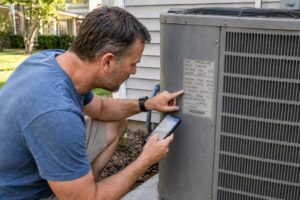
- Phone camera to photograph your main breaker panel labels and HVAC data plate
- Utility details confirming natural gas or liquid propane availability
- List of essential appliances including HVAC, water heater, refrigerator, and well pump
Follow these steps to estimate your home’s total running wattage, select your realistic kilowatt tier, and prepare a checklist for your professional installation consultation.
Step 1: Choose Between Essential-Circuit and Whole-Home Coverage
Before looking at kilowatt ratings, define your backup power scope. Choosing your coverage strategy early shapes every load calculation that follows.
Decide between two core options:
| Backup Option | What It Powers | Key Considerations |
|---|---|---|
| Essential-Circuit Backup | Critical necessities like refrigeration, internet, lights, key outlets, and a primary HVAC system. | Intentionally excludes heavy 240V loads such as electric clothes dryers and hot tubs. |
| Whole-Home Coverage | Your entire home, including multiple major appliances and household systems. | Uses automatic load management so the generator does not attempt to start multiple large appliances simultaneously. |
Ask yourself these North Alabama decision prompts:
- Do you need HVAC during humid Huntsville summers or freezing winter ice storms?
- Do you rely on medical equipment, CPAP machines, or work-from-home setups?
- Are you on city water or an electric well pump in rural Madison County?
Whole-home power does not mean running every fixture at once. Write down a clear statement listing your non-negotiable appliances and optional items. This written load list is your foundation for Step 2.
Step 2: Map Your Appliances into a Prioritized Load List
Skip complex math for a moment and conduct a quick five-minute home walk-through. Grab a notepad and create three columns: Must Run, Nice to Have, and Off During Outage.
Categorize your key electrical items room by room:
| Electrical Category | Key Items |
|---|---|
| HVAC Systems |
Note: Pay close attention to electric heat strips, which pull massive wattage during sudden North Alabama freezes. |
| Food and Water |
|
| High-Draw Resistive Loads |
|
Flag all high-draw resistive appliances clearly. Treating every resistive appliance as a “must run” item inflates required generator capacity and cost. During multi-day outages caused by spring tornado lines or severe ice storms, focus on realistic simultaneous use. Plan for sustained comfort and food safety rather than running every luxury appliance at once.
With your prioritized load list ready, move to Step 3 to gather exact nameplate data from each appliance.
Step 3: Calculate Running Watts Using Appliance Nameplates
Safety Warning: Never open an energized electrical panel or remove service covers. You can safely read exterior nameplates and take photos, but leave all internal electrical work to licensed professionals.
Check the specification label on each item from your load list to collect your inputs:
- HVAC systems and motors: Record the Voltage (typically 240V for central A/C) and the RLA or FLA rating (running amps).
- Standard appliances: Record rated watts if listed. If only amps are shown, calculate: Running Watts = Volts x Amps (this provides a practical estimate for planning).
Example Calculation:
- Central A/C unit: 240 Volts x 15 RLA = 3,600 Running Watts
- Household baseline load (refrigerator, lights, TV): 1,200 Running Watts
- Subtotal: 4,800 Continuous Running Watts
Check for often-forgotten continuous loads:
- Internet equipment (modem and router)
- Garage door opener
- Dehumidifier
- Aquarium
- Septic or sump pump
Adding up these loads gives you your continuous-wattage subtotal. This baseline figure is what you’ll add a cushion to after calculating starting surges.
Call (256) 937-7889 for a Free Generator Assessment
Step 4: Account for Motor Starting Surges and Safety Margins
Ignoring inrush current is the most common generator sizing mistake. Large motors like central AC compressors and well pumps require three to four times their running power to start. Ignoring this surge causes voltage drops that trip generator breakers or trigger shutdowns.
Record LRA and Calculate Peak Surge
Find the LRA (Locked Rotor Amps) rating on your outdoor AC condenser or heat pump data plate. Calculate peak surge:
Starting Watts = LRA x Volts (typically 240V)
A compressor labeled 75 LRA requires 18,000 starting watts (75 x 240). Your generator must survive this surge while continuous loads are running. With multiple HVAC systems, assume at least one starts while others operate.
Consider an HVAC Soft-Start
If surge demands inflate your generator size, consider adding an HVAC soft-start kit. Soft-starts reduce starting amps significantly, often allowing you to drop into a smaller generator size class. Always install and test soft-starts under normal utility power first.
Apply the Cushion Rule
Add a 15% to 20% safety margin to your continuous running subtotal to prevent overloads.
Carry forward these two final sizing constraints:
- Continuous Load: Running subtotal plus 15–20% cushion
- Peak Starting Surge: Highest single motor surge (adjusted if using soft-start)
Step 5: Convert Your Load Math into a kW Tier and Fuel Strategy
Use your continuous wattage total and surge requirements to choose a standard generator tier. HVAC tonnage and electric appliances determine system sizing far more than household square footage:
| Generator Size | Typical Application |
|---|---|
| 10 kW to 14 kW | Manages essential circuits or smaller homes running a single 2-to-3-ton HVAC unit. |
| 18 kW to 24 kW | Provides standard whole-home coverage for typical North Alabama homes with a 4-to-5-ton HVAC system or dual heat pumps. |
| 26 kW and Above | Handles large or all-electric homes with high continuous power demands. |
Your fuel source impacts operational capacity, extended outage planning, and installation scope:
- Natural Gas (NG): Delivers continuous fuel without delivery trucks, but reduces rated generator output by 10% to 20% compared to propane. High demand during severe regional cold snaps or TVA grid events can also reduce utility supply pressure.
- Liquid Propane (LP): Provides full rated kW output, but requires adequate tank capacity and clear driveway access for delivery trucks during multi-day outages.
Site conditions like gas piping length, utility meter capacity, and LP tank placement determine physical installation scope. Your existing heating system setup may also influence fuel type selection, so reviewing your heating system installation options before committing is worth the time. Select your intended fuel type and write down one to two target kW tiers to bring to your installer consultation.
Step 6: Evaluate Brands and Schedule a Professional Site Assessment
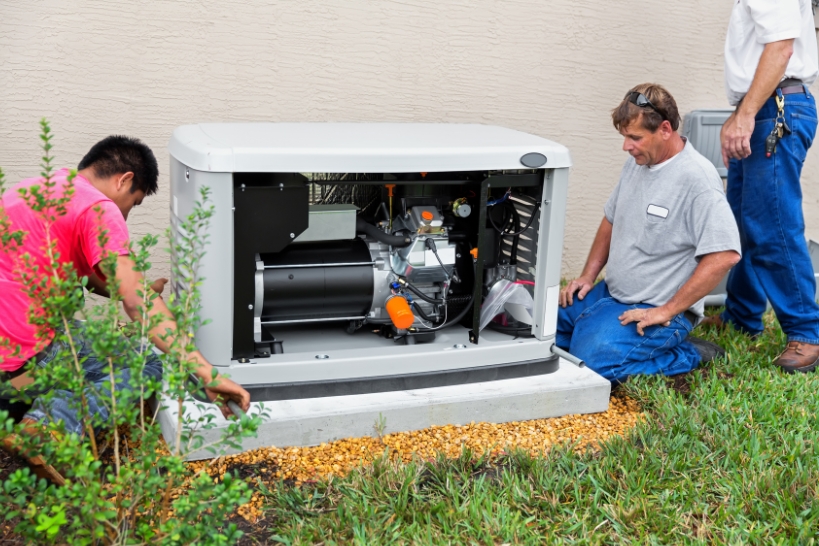
When severe weather strikes North Alabama, long-term reliability depends on serviceability. The key difference between major generator brands is local service network density and parts availability across Huntsville and Madison when multiple homes need repairs simultaneously.
Evaluate brands using these ownership factors:
- Service Network and Parts: Verify local technician availability and spare parts inventory.
- Controls and Design: Compare standard versus proprietary control interfaces and monitoring features.
- Durability and Noise: Select corrosion-resistant aluminum enclosures built for high Southern humidity and quiet operation.
If your electrical load falls near a kilowatt tier boundary, adding an HVAC soft-start kit or load management module often yields better value than jumping to a larger system.
Because standby generators run on internal combustion engines, routine upkeep is critical. Review our standby generator maintenance guide to understand required service schedules.
Schedule an in-person site assessment to finalize your setup. A technician will inspect your electrical panel, verify transfer switch placement, measure gas pressure, and confirm final kW requirements. Browse our generator hub or learn more about whole-home generator installation to get started.
Frequently Asked Questions About Generator Sizing
What size whole house generator do I need for a 2,000 sq ft house?
Square footage is only a rough estimate because total electrical loads vary wildly between homes. Real sizing drivers include your HVAC tonnage and Locked Rotor Amps (LRA), whether your water heater and furnace are gas or electric, and whether you choose essential-circuit or whole-home backup. Most 2,000-square-foot homes require between 14 kW and 22 kW. Reference Steps 2 through 5 above to calculate your home’s precise load.
Can a standby generator run my central A/C or heat pump during an outage?
Yes, provided the generator is sized to handle both continuous running watts and the peak starting surge. HVAC compressors draw a brief inrush current upon startup that can be three to four times higher than standard running power. Adding an HVAC soft-start kit lowers this initial surge, allowing a smaller generator to power your cooling system safely.
Is an HVAC soft-start worth it for generator sizing?
Yes, a soft-start is worth installing if your compressor has a high LRA or if your load calculation puts you right on the boundary of a larger generator tier. It reduces starting surge by up to 60–70%, often preventing the need to step up to a more expensive unit. Always install and test soft-start kits under utility power before relying on generator operation.
Natural gas vs propane: which is better for North Alabama outages?
Natural gas provides continuous fuel with zero delivery logistics, though utility pressure drops and generator output reductions of 10–20% can occur during widespread extreme weather. Liquid propane delivers full kilowatt performance, but requires dedicated tank storage and reliable delivery access during multi-day outages from North Alabama tornado lines or ice storms. Base your decision on existing fuel connections and expected outage duration.
Generac vs Kohler: what should homeowners compare beyond kW?
Look beyond baseline kilowatt ratings to evaluate local service network density, parts availability, warranty conditions, and control software. A standby generator is only as reliable as the speed of local technician support after severe weather strikes. The ideal brand is the one supported by a factory-certified local service team in your area.
How much does a whole house generator cost installed?
Installation pricing varies based on overall project scope rather than equipment costs alone. Key cost drivers include generator size tier, automatic transfer switch type, electrical panel capacity, fuel line distance, propane tank placement, permits, and trenching requirements. Request itemized quotes from licensed contractors to confirm accurate pricing for your property.
Can I size and install a standby generator myself, or should I hire a pro?
Homeowners can handle initial load planning and appliance math using our step-by-step guide above. Physical installation requires licensed electrical and gas plumbing work, municipal permitting, and safety testing. If you prefer professional installation, review our whole-home generator installation page or browse our generator hub to schedule an assessment with Best Care Home Services. You can also check our standby generator maintenance guide to learn about long-term system care.
Get the Right Generator for Your North Alabama Home
Sizing a whole house generator comes down to three numbers: continuous running watts, peak starting surge from your largest motor, and a 15–20% safety cushion on top. Get those three right, match them to a kW tier, and you’ll have reliable backup power through whatever storm season throws at you. Best Care Home Services handles generator installation across Huntsville, Madison, and the surrounding North Alabama communities.