If brutal Alabama summers drive your power bill, you might wonder: do smart thermostats save money, or are they just fancy gadgets?
The short answer is yes, but with an important distinction. A smart thermostat does not make an air conditioner mechanically more efficient. Instead, it lowers your utility bill by cutting unnecessary HVAC runtime when you are away or asleep.
DOE setback guidance and ENERGY STAR estimates support an 8% to 10% planning range for heating and cooling savings, but each household will see different results. Still, results vary if you work from home, maintain strict manual settings, or run a misconfigured heat pump. If cooling bills are already spiking, exploring professional air conditioning service is just as critical as updating your controls.
Here is a look at the real payback math, local Alabama utility incentives, Nest versus ecobee performance, and key installation tips to maximize your return.
Do Smart Thermostats Save Money? Realistic Savings and Payback Math
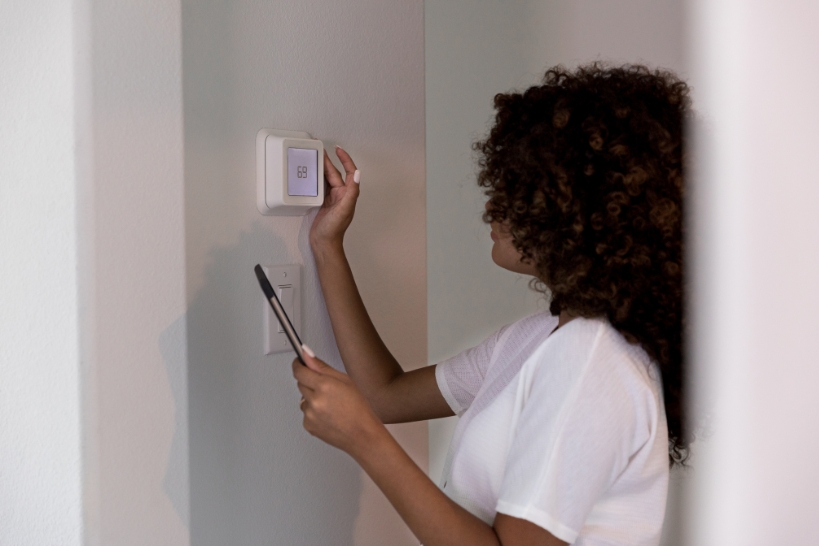
According to the U.S. Department of Energy, adjusting your thermostat back 7 to 10 degrees for eight hours a day can save up to 10% annually on heating and cooling. These savings come strictly from reducing equipment runtime, not magic. ENERGY STAR data provides a practical benchmark, showing smart thermostats save roughly 8% on utility costs, or about $50 per year.
However, your actual results depend on three key factors:
| Key Factor | How It Affects Results |
|---|---|
| Existing Habits | If you already maintain a strict manual schedule, additional savings will be modest. |
| Home Occupancy | If someone is home all day, your daytime setback windows shrink. |
| Heat Pump Setup | Incorrect configuration on a heat pump can accidentally engage expensive auxiliary heat strips, driving electric bills up instead of down. |
Use this simple formula to calculate your personal break-even timeline:
- Annual Savings ($) = (Annual Heating and Cooling Costs) × 0.08 to 0.10
- Payback Period (Years) = (Thermostat Cost − Utility Rebates) ÷ Annual Savings
In Alabama, where summer cooling dominates power bills, a smart thermostat can pay for itself quickly, though local humidity, equipment type, and utility rebates will determine your exact timeline.
Do Smart Thermostats Save Money in Alabama? Climate and Utility Rebates
Picture a humid July afternoon in Madison. Your AC runs constantly while the house sits empty. Smart schedules and geofencing prevent you from cooling an empty home, creating real savings during North Alabama’s long cooling season.
Small runtime reductions add up quickly on monthly utility bills and help prevent overcooling to combat muggy indoor air. Local utility incentives also lower upfront equipment costs:
- TVA territory in North Alabama: Check TVA EnergyRight and your local power company for current device eligibility and program terms.
- Alabama Power territory: Review current thermostat and demand-response offers before buying. Incentives and eligible models can change.
Always check current device eligibility and program rules with your utility provider before purchasing.
Nest vs. Ecobee: How to Choose the Right Smart Thermostat
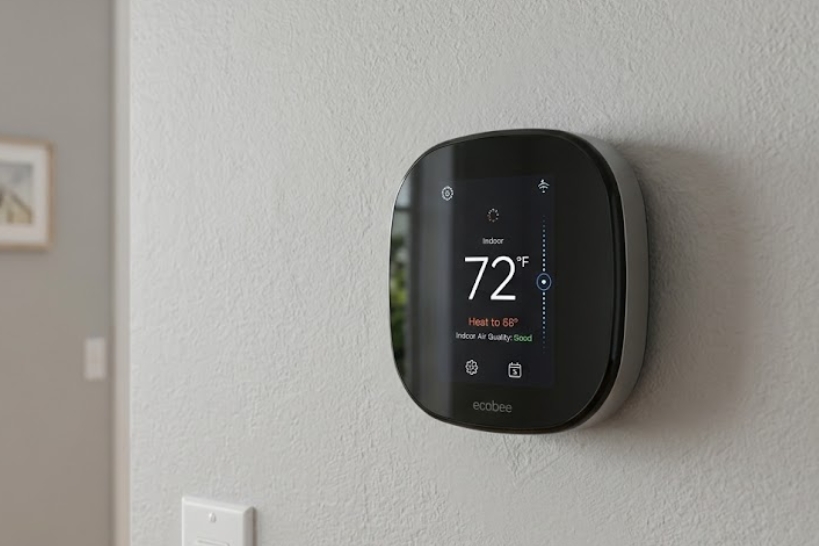
The “best” smart thermostat isn’t the one with the biggest savings claim; it’s the one that matches your home’s comfort problems.
To choose the right device, weigh your daily routines and layout against these decision factors:
| Decision Factor | Which Option Fits Best |
|---|---|
| Home Layout and Hot Spots | If you battle sweltering upstairs rooms, ecobee uses remote sensors and occupancy averaging to balance temperatures across multi-level spaces. |
| Schedules and Ease of Use | If you want hands-off management, Nest uses adaptive learning and phone geofencing for an effortless “set it and forget it” experience. |
| Utility Incentives | Confirm your preferred model qualifies for local rebates through programs like TVA EnergyRight. |
Both brands lower bills by preventing unnecessary runtime when rooms sit empty. Just remember that smart programming cannot overcome leaking ductwork or failing equipment. If hot spots persist, schedule an air conditioning inspection to address airflow issues software alone cannot fix.
Smart Thermostat Installation and Setup: Avoiding Costly Setup Errors
Do smart thermostats save money right out of the box, or can improper setup drive bills higher? Consider a Madison homeowner who installed a new unit in November, only to watch their January electric bill surge. The culprit was a simple configuration error: the thermostat engaged expensive auxiliary heat strips every morning to recover from a steep overnight setback.
Before tackling a DIY installation, review this quick readiness checklist:
- C-wire power: Smart thermostats require steady 24V power. If your existing wiring lacks a common wire, you must install a power extender kit (PEK) or run a new dedicated conductor.
- Heat pump configuration: Large temperature setbacks force heat pumps into high-wattage resistance heat. Stick to shallow 1-to-2 degree setbacks, enable compressor-first adaptive recovery, and program an outdoor aux lockout so strip heat only runs during sub-freezing temperatures.
- System complexity: Multi-stage blowers and zoned equipment require precise terminal mapping at the air handler control board.
If you have older wiring, a heat pump with aux strips, or uneven room temperatures, professional installation helps the thermostat work as intended with your equipment. Best Care technicians can install your smart thermostat and optimize your overall heating and air conditioning performance. To keep your system calibrated and running smoothly all year, pair your setup with our ComfortGuard maintenance plan.
How to Maximize Your Smart Thermostat Savings
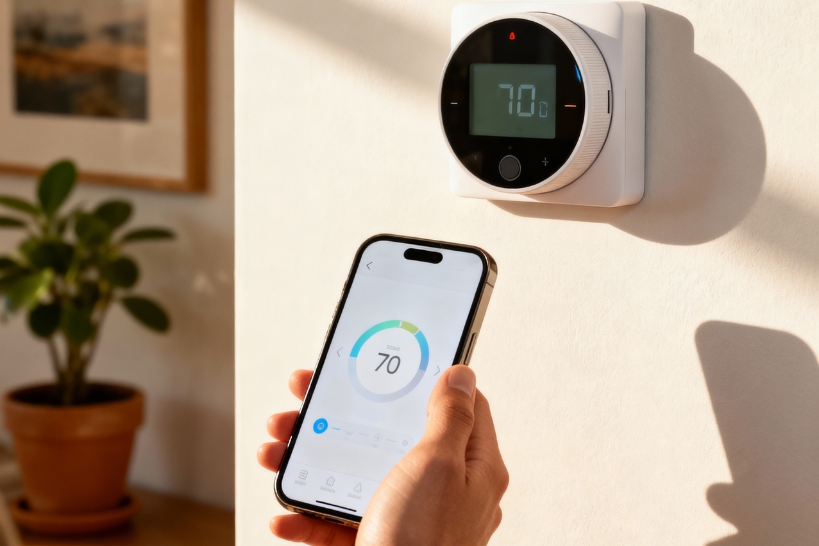
Smart thermostats can save money, but they do not save every household the same amount. Your daily habits, home layout, and equipment setup all dictate your actual return.
To capture real energy savings in North Alabama, follow this three-step plan:
| Step | What to Do |
|---|---|
| 1. Check Your Utility First | Confirm rebate eligibility and demand-response programs through TVA EnergyRight or your local electric provider before buying a unit. |
| 2. Match the Device to Your Home | Choose remote room sensors to balance hot spots, geofencing for irregular schedules, or a simpler interface you will actually manage. |
| 3. Configure for Your Equipment | Set shallow temperature setbacks on heat pumps to prevent expensive auxiliary electric heat strips from kicking on. |
Smart controls cannot overcome dirty coils, duct leaks, or failing parts. If you want to reduce runtime and maximize cooling comfort, schedule a professional air conditioning inspection. Enrolling in a ComfortGuard maintenance plan keeps your equipment calibrated so your system delivers the full efficiency your thermostat is programmed to achieve.
Need help choosing or setting up a smart thermostat? Request service from Best Care.
Frequently Asked Questions
Do smart thermostats save money in Alabama if my AC runs most of the year?
Yes, smart thermostats can save money in cooling-heavy climates like Alabama because even small percentage reductions in runtime translate to substantial kilowatt-hour savings over long summers.
- Cooling makes up a major portion of annual utility bills in North Alabama, so an 8% to 10% reduction delivers noticeable dollar savings.
- Automated scheduling and geofencing keep your air conditioner from running needlessly while you are away during peak afternoon heat.
- Actual savings vary based on household habits, home insulation, and setting sensible baseline temperatures.
How long does it take for a smart thermostat to pay for itself?
Payback time varies with the thermostat price, available incentives, HVAC runtime, and your current temperature habits. Calculate your payback timeline using a simple equation: (Thermostat Cost minus Rebates) divided by Annual Energy Savings.
- Rebates and incentives from TVA EnergyRight or Alabama Power can reduce the initial purchase price by $50 to $200.
- With typical seasonal savings of $50 to $100 annually, an incentivized thermostat often reaches break-even in under twelve months.
Nest vs. ecobee: which is better for Alabama homes with hot rooms upstairs?
Ecobee is generally better for multi-story homes with hot upstairs rooms because its remote sensors measure temperature and occupancy in specific living spaces rather than just at the wall unit. Ecobee allows you to prioritize or average readings across remote sensors to keep warm second-floor rooms comfortable during summer afternoons.
While Nest works best for homeowners who prefer automated schedule learning and simple, hands-off operation. If upstairs rooms remain uncomfortable regardless of thermostat adjustments, schedule a professional air conditioning inspection to evaluate airflow and duct balancing.
Will a smart thermostat still save money if someone works from home?
Yes, a smart thermostat can still lower utility bills for work-from-home households, though the savings are typically smaller because daytime setback periods are shorter.
- Remote room sensors allow you to prioritize comfort in your home office during work hours without overcooling unused areas.
- Features like vacation modes, automated sleep schedules, and smart humidity tracking eliminate accidental energy waste.
- Real-time energy reports help you identify and correct costly usage spikes throughout the week.
Do I need professional smart thermostat installation, and do I need a C-wire?
Most smart thermostats require a continuous 24-volt power source through a common wire (C-wire) to maintain Wi-Fi connectivity and screen power without draining internal batteries. If your thermostat wiring lacks a C-wire, you will need to install a power extender kit (PEK) or have a technician pull a new dedicated conductor.
Homes with heat pumps require precise wiring configuration to prevent high-wattage auxiliary heat strips from turning on accidentally during mild weather. A licensed technician can confirm proper voltage mapping and verify your heating and cooling stages are configured correctly.