Standby generators need professional service once a year or every 100 run-hours, whichever comes first. Monthly owner checks take about five minutes and keep the unit exercise-ready between professional visits.
“If my generator only runs during outages, do I really need yearly service?”
Waiting for a blackout to discover your backup power system won’t start is every homeowner’s worst nightmare. Knowing how often a standby generator needs service keeps your home protected when the grid goes down. Whole-home generators require both calendar-based and run-hour-based maintenance to stay reliable. In North Alabama, severe storms, heavy pollen, and intense summer humidity make routine care even more critical.
Before the next weather emergency hits, this guide covers:
- Common service intervals, balancing annual tune-ups with 100-200 run-hour limits
- What a thorough professional maintenance visit and technical checklist include
- Safe, simple monthly DIY checks and exercise cycles you can handle yourself
- Fast troubleshooting steps to take if your unit refuses to start
Understanding generator care starts with the schedule, because “once a year” isn’t always the full story.
How Often Does a Standby Generator Need Service? Calendar vs. Run Hours
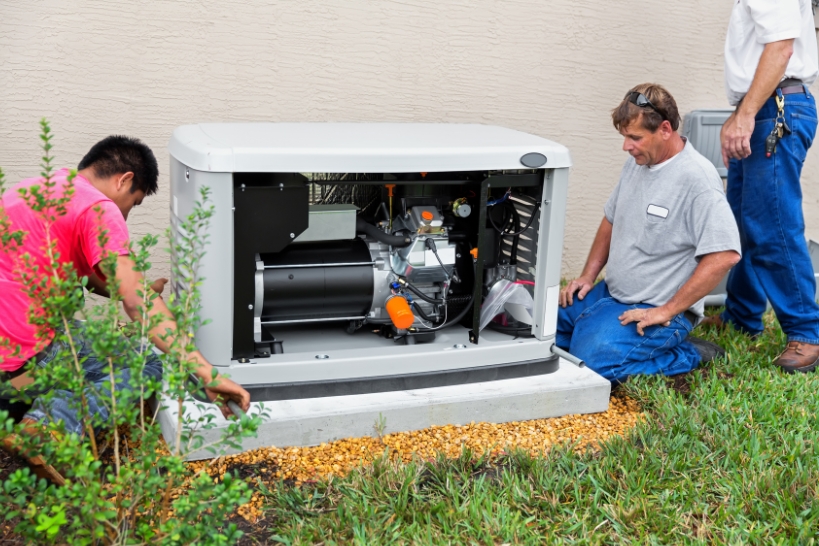
Standby generator service is due every 1 year or 100 run-hours, whichever comes first. This rule means your system operates on two competing clocks:
- Calendar Clock: Even during mild seasons without outages, ambient humidity causes corrosion, oil breaks down, and starter batteries slowly lose charge.
- Hour Meter Clock: Major storm outages force continuous operation, rapidly breaking down synthetic oil and clogging air filters.
For popular systems like Generac, map your practical schedule around these core benchmarks:
| Maintenance Interval | Recommended Service |
|---|---|
| Break-In Service | Required after the initial 25 total runtime hours to drain factory oil and clear metal wear debris. |
| Baseline Annual Service | Due every 1 year or 100 runtime hours for routine oil changes, filter replacements, and battery testing. |
| Deeper Intervals | Performed at 200 hours (or 2 years) and 400 hours (or 4 years) for valve clearance adjustments, spark plug changes, and electrical load testing. |
| Extended Outage Rule | Check engine oil every 24 hours during prolonged grid failures, and change oil and filters after 100 continuous running hours. |
Beyond the clock, watch for two real-world triggers: schedule service immediately if you bought a home without clear service records, or treat your unit as high-hour equipment if severe North Alabama storms caused multi-day outages last season. Always verify exact intervals in your owner’s manual.
What Complete Standby Generator Service Includes
If your generator “runs fine” during weekly self-tests but has a weak battery, it can still fail to auto-start when severe storms hit North Alabama. Knowing how often a standby generator needs service and what that tune-up covers means reliable backup power when the grid drops.
A complete professional service checklist includes:
- Engine oil and filter replacement: Prevents thermal breakdown and protects internal engine components.
- Air filter service: Clears heavy spring pollen buildup common in Huntsville and Madison homes.
- Spark plug inspection: Confirms clean, reliable ignition during sudden outages.
- Battery and terminal maintenance: Clears corrosion, checks voltage, and verifies charger operation.
- Enclosure inspection: Clears pest nests, yard debris, and checks for oil or fuel leaks.
- Controller verification: Confirms system settings are on AUTO and resets maintenance reminders.
- Transfer switch test: Verifies automatic power transfer to your electrical panel.
Skipping routine service creates real risks:
- Unexpected no-start failures during storm outages
- Low-oil shutdowns and accelerated engine wear
- System degradation from high summer humidity
Scheduling pre-season maintenance before storm season delivers dependable protection when you need it most.
The 5-Minute Monthly Generator Check
Most generator failures happen on start-up rather than during operation. Starter batteries drain and intake vents clog quietly over time, making brief monthly inspections critical for reliable backup power.
Spend five minutes each month running through this simple routine:
- Confirm settings: Verify the main controller is set to AUTO, not OFF.
- Verify exercise cycle: Confirm your weekly self-test ran or test it briefly per your manual.
- Visual inspection: Clear leaves, pollen, and pest nests from vents, and check for fuel smells.
- Review alerts: Check your mobile app or controller screen for active warning codes.
After an extended outage, inspect the unit for leaks or unusual noise once utility power restores, and log the runtime hours in your phone notes. If you notice persistent warning codes or feel unsure about setting your exercise cycles, schedule a professional inspection to keep your system ready.
What to Do When Your Generator Won’t Start: A Safe Checklist
Power’s out: why didn’t the generator kick on? Run through this safe, 10-minute checklist to rule out simple fixes before calling for help. Never open gas lines, alter wiring, or bypass safety shutdowns.
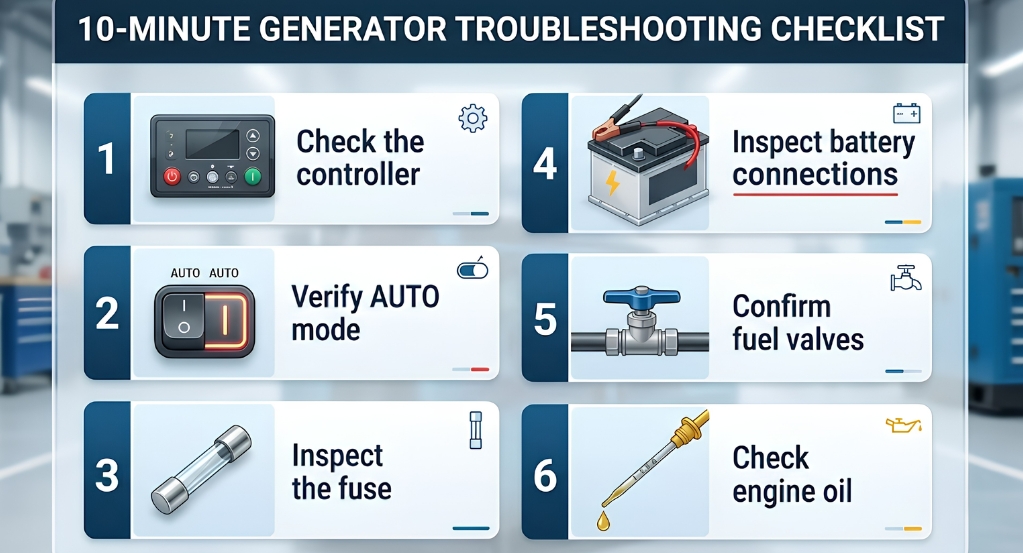
10-Minute Troubleshooting Checklist:
- Check the controller: Look for active error codes or warning lights.
- Verify AUTO mode: Confirm the switch is set to AUTO and not locked out.
- Inspect the fuse: Check the 7.5A control fuse if accessible per your owner’s manual.
- Inspect battery connections: Look for corroded terminals. Rapid clicking indicates low voltage.
- Confirm fuel valves: Visually verify natural gas valves are open or propane is present.
- Check engine oil: Low oil levels trigger an automatic safety shutdown.
A weak battery causes most unexpected start failures. Replacing your starter battery every 2 to 3 years prevents surprise outages during severe weather.
Contact Best Care immediately for repeated system lockouts, fuel smells, transfer switch issues, or if the unit only starts in MANUAL.
How to Keep Your Standby Generator Storm-Ready Year-Round
Managing your standby generator comes down to a simple, three-part maintenance rhythm:
| Maintenance Schedule | Recommended Action |
|---|---|
| Monthly | Confirm your controller is set to AUTO, verify the weekly exercise cycle ran, and clear leaves or pollen from intake vents. |
| Annually | Schedule a professional tune-up to change oil, replace filters, and test battery output. If your system’s service history is unknown, book an inspection right away. |
| After Extended Outages | Track total runtime hours during grid failures and change oil every 100 continuous running hours. |
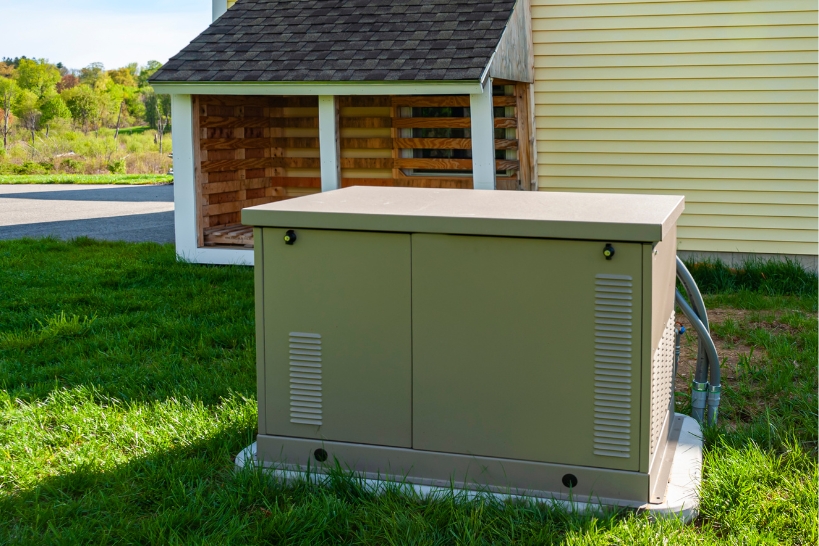
Ready to protect your investment before North Alabama’s next severe storm? Schedule your annual generator service in Huntsville, Madison, and North Alabama with Best Care Home Services. To put your home prep on autopilot, enroll in our ComfortGuard plan for maintenance made automatic. If you are unsure whether your current unit handles your home’s total electrical load, review our guide on what size whole-home generator fits your needs.
Frequently Asked Questions About Generator Maintenance
How often does a standby generator really need service if it barely runs?
Yes, standby generators need service at least once a year even if power outages rarely happen. Engine oil breaks down over calendar time, and starter batteries slowly lose charge regardless of runtime hours. Plus, intense North Alabama humidity can corrode electrical connections and trigger control board faults if the unit is left uninspected.
Do I really need the first break-in oil change?
Yes, completing the initial break-in service is critical for a brand-new generator engine. During the first 25 to 30 operating hours, microscopic metal shavings shed from factory parts directly into the oil. Draining this original oil removes abrasive debris before it can damage internal components. If an outage pushes you past that hour mark, complete the service as soon as power returns.
How often should I change generator oil during a long power outage?
During a prolonged power outage, check your generator’s oil level every 24 hours after temporarily shutting down the unit. Perform a complete oil and filter change around every 100 continuous running hours, depending on your manufacturer’s specifications. Fresh oil prevents severe thermal breakdown when your engine runs non-stop for multiple days.
Can I do standby generator maintenance myself, or do I need a pro?
Homeowners can safely handle simple monthly checks, such as clearing yard debris from exterior intake vents and verifying the controller stays set to AUTO. Fluid changes, valve adjustments, and automatic transfer switch testing are best left to professionals. Professional service keeps your warranty intact and confirms your electrical transfer equipment operates safely.
What is the most common reason a standby generator won’t start?
A dead or weakened starter battery is the single most common reason a whole-home generator fails during a blackout. Generator batteries generally last two to three years and can lose charge without obvious warning signs. Other frequent causes include low-oil safety shutdowns, closed fuel supply valves, and unaddressed controller error codes.
Who provides generator service in Huntsville, AL?
When choosing generator service in the Huntsville area, look for a licensed, insured contractor trained to handle high-voltage transfer switches and standby power systems. Local technicians, including the team at Best Care Home Services, provide whole-home generator maintenance and repairs across North Alabama, offering automatic scheduling reminders through their ComfortGuard plan to keep your equipment storm-ready.