If you are wondering why your heat pump is blowing cold air during a North Alabama cold snap, this guide helps you diagnose whether your system has a real heating fault or is simply running a normal defrost cycle. Heat pumps produce a gentler warmth than gas furnaces, and high winter humidity in Huntsville, Madison, and Decatur often triggers brief cool-air cycles. Designed for North Alabama homeowners, this beginner-friendly troubleshooting flow takes about 15 minutes and requires no tools.
Before you begin, gather a flashlight, make sure you have clear access to your thermostat, and have a clean air filter ready (a kitchen thermometer is optional for vent readings). As local HVAC experts, Best Care provides reliable heating repair when DIY steps reveal a major issue.
Start with the easiest no-tools thermostat checks.
Check Your Thermostat Mode and Fan Settings
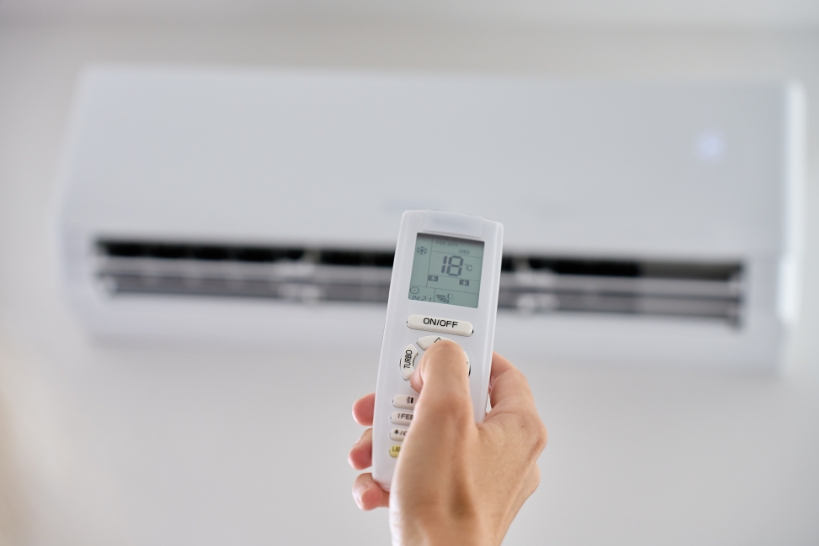
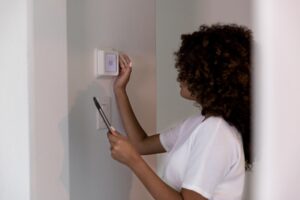
Many cold air issues stem from thermostat settings. Setting the fan to ON causes the blower to run continuously, circulating unheated air through vents between heating cycles.
Adjust your thermostat using these steps:
- Set mode to HEAT: Avoid switching to Emergency Heat unless your system has completely failed.
- Raise setpoint 3 to 5 degrees: Set the temperature above current room temp to trigger a heating call.
- Set FAN to AUTO: This keeps the blower running only during active heating cycles.
Wait 10 to 20 minutes for the heat pump to stabilize. Indoor temperatures should creep upward, and vent air should feel warmer. If the system fails to run at all, note it for power and breaker checks in later steps.
Test Supply Air vs. Return Air Temperatures
Heat pumps deliver air between 85 and 110 degrees F. Because this is close to human body temperature (98.6 degrees F), vent air can feel cool compared to a gas furnace, even when system operation is normal.
To verify actual heating, run a simple temperature test:
- Let the system run for 15 to 20 minutes.
- Measure return air temperature near the intake grille.
- Measure supply air temperature at a nearby vent.
A healthy system produces a temperature rise of 15 to 35 degrees F (supply minus return). If supply air stays at or below room temperature, you may have a stuck reversing valve, low refrigerant, or failed auxiliary heat. If temperature drops only briefly, check for defrost mode next.
Identify if Your Heat Pump Is in Defrost Mode
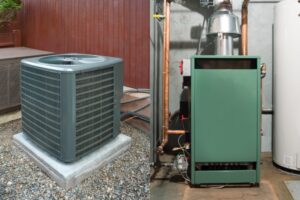
On humid North Alabama winter mornings, your heat pump temporarily shifts operation to melt frost on the outdoor coil. During defrost, indoor vents briefly blow cooler air while heat is redirected outside.
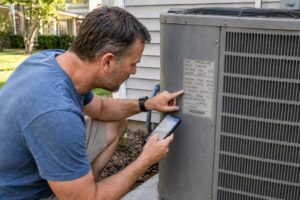
Check your outdoor unit for these normal indicators:
- The outdoor fan stops while the compressor continues running.
- Steam or water vapor rises from the outdoor unit.
- A noticeable “whoosh” sound occurs as the reversing valve shifts.
Defrost cycles typically end within 5 to 15 minutes. If heavy ice does not clear, defrost repeats constantly, or the unit never returns to heating, move to later steps or call a pro.
Inspect Your Air Filter and Clear Airflow Restrictions
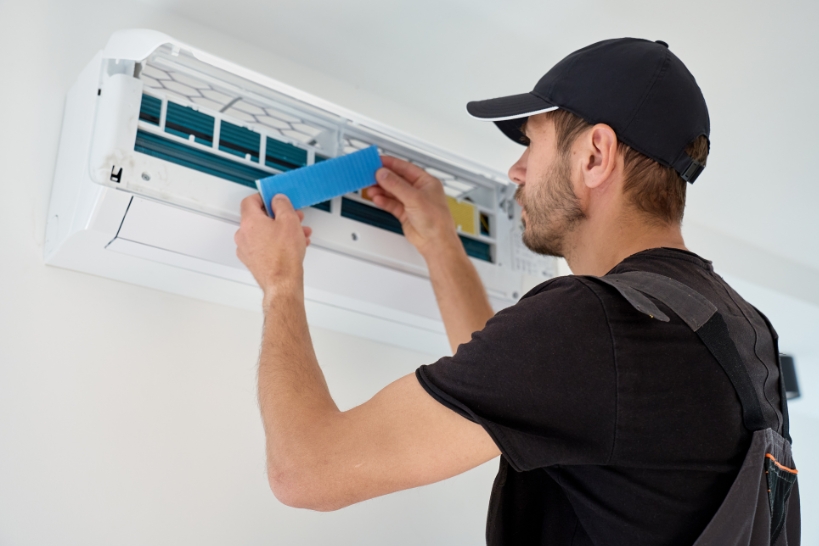
Restricted airflow is a primary cause of cool vents. To restore proper circulation:
- Test the filter: Pull the air filter and hold it up to a light. If light cannot pass through, replace it with a clean filter of the exact same size.
- Clear grilles and registers: Confirm supply registers are open and return grilles are clear of furniture, rugs, or drapes.
- Re-check performance: Run the system for 15 to 20 minutes and re-check comfort and the temperature difference between supply and return vents.
Weak airflow usually indicates a blower or duct issue requiring service. Caution: Avoid cranking your thermostat setpoint higher. Doing so forces expensive auxiliary heat to engage without fixing the restriction.
Clear Outdoor Unit Obstructions and Check for Ice
Safety Warning: Never chip ice with sharp tools, pour boiling water, or open cabinet panels. Tools puncture delicate coil fins, and sudden thermal shock ruptures refrigerant lines.
- Turn off power at the outdoor disconnect switch or thermostat.
- Clear leaves, mulch, and grass to maintain 2 feet of clearance around the unit.
- Inspect the outdoor coil to differentiate ice patterns.
Light frost: A thin layer that disappears during defrost cycles is normal.
Thick ice: Solid encasement that persists indicates low refrigerant, airflow issues, or a faulty defrost control board.
If severe icing returns after clearing debris, turn off the system to prevent compressor failure and call a certified technician.
Check AUX Heat, Breakers, and When to Call a Pro
Safety Warning: Resetting a tripped breaker repeatedly or forcing Emergency Heat can damage electrical components.
- Auxiliary Heat (AUX) is automatic backup heat that engages during severe North Alabama cold snaps.
- Emergency Heat (EM HEAT) is manual backup that bypasses the outdoor compressor. Use it only if your heat pump fails completely.
Quick checks before calling a technician:
- Reset a tripped heat pump or air handler breaker once. If it trips again, stop immediately.
- Note if AUX runs constantly in mild weather. That pattern points to a system fault.
- Verify your thermostat O/B orientation setting if heat and cooling feel reversed.
Call a pro for: persistent cold air or heavy ice; burning smells, loud noises, or repeated breaker trips.
In Huntsville, Madison, or Decatur, Best Care can safely diagnose reversing valves, defrost controls, and refrigerant issues. Reach out for professional heating system repair services today.
Pro Tips for Heat Pump Care and Season Prep
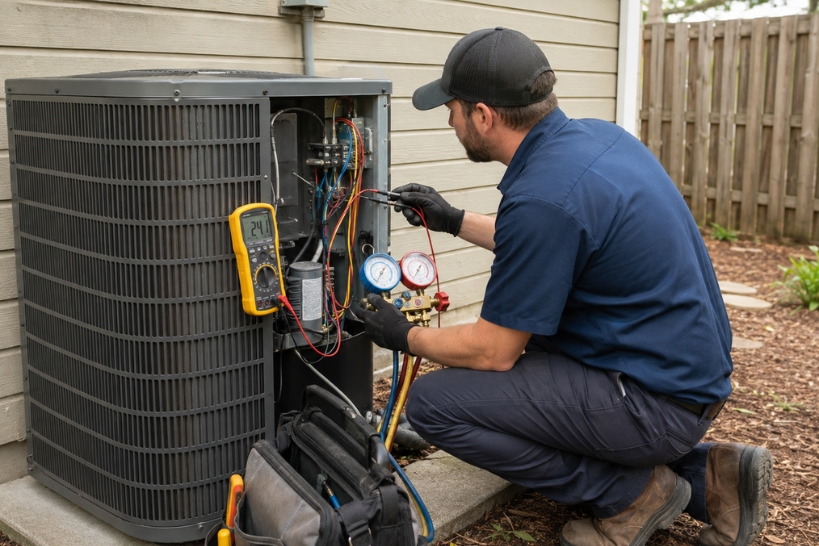
- Maintain outdoor clearance: Keep shrubs, leaves, and yard debris trimmed two feet back year-round. Airflow restrictions force your system into prolonged defrost cycles that blow chilly air indoors.
- Avoid large thermostat jumps: Adjust temperatures by no more than two degrees at a time. Larger jumps engage auxiliary heat unnecessarily, driving up electric bills.
- Log symptoms before calling for service: Note outdoor temperatures, fan behavior, active AUX lights, and tripped breakers. These details help your technician diagnose cold air issues faster.
- Schedule proactive maintenance: Invest in annual professional heater maintenance or join Best Care’s ComfortGuard plan to catch minor component failures before cold snaps arrive.
- Prepare year-round: Take steps to prepare your heat pump for spring to extend system life and catch wear early.
Frequently Asked Questions
Why does heat pump air feel cold compared to my old furnace?
Heat pumps deliver lower supply air temperatures (85 to 110 degrees F) than gas furnaces (120 to 140 degrees F). Because this air flows close to human body temperature (98.6 degrees F), it feels cool to the touch. Judge performance by measuring the temperature rise between return and supply vents, not by hand.
How long should a defrost cycle last?
A normal defrost cycle lasts between 5 and 15 minutes. During this window, the outdoor unit clears frost while indoor vents temporarily blow cooler air. If your system stays in defrost longer, or cycles repeatedly with heavy icing, schedule a service call.
What does AUX heat mean on my thermostat?
AUX heat stands for auxiliary heat. It is automated backup electric heat that engages during severe cold snaps. Electric resistance heat uses significantly more electricity, causing utility bills to jump. If AUX heat runs continuously in mild weather, your system requires repair.
Should I switch to Emergency Heat?
Only switch to Emergency Heat (EM HEAT) if your heat pump completely fails and cannot heat your home. EM HEAT bypasses the outdoor compressor and runs expensive electric backup heat continuously. If you must rely on EM HEAT to stay warm, call for professional heating repair.
Can I DIY heat pump troubleshooting or should I hire a pro?
Homeowners can inspect thermostats, change dirty air filters, unblock registers, and clear debris around the outdoor unit. Hire a pro for refrigerant leaks, reversing valve failures, electrical issues, or heavy outdoor coil icing.
Heat pump vs. furnace for Alabama: how do I choose?
Heat pumps offer superior energy efficiency for mild North Alabama winters, whereas furnaces provide higher supply heat during rare deep freezes. To explore full system options, read our heat pump vs. furnace for Alabama comparison guide. For immediate comfort concerns, Best Care Home Services is ready to help.
Is Your Heat Pump Still Blowing Cold Air?
If you have worked through these steps and your heat pump is still blowing cold air, the problem is likely beyond DIY territory. A stuck reversing valve, refrigerant leak, or failed defrost control board all require a licensed technician. Best Care Home Services serves Huntsville, Madison, Decatur, and surrounding North Alabama communities. Since your heat pump also runs your home’s air conditioning in summer, these same components can cause cooling problems too — if you notice similar symptoms during warm months, our AC repair technicians can diagnose the issue.